
The History of the Wooden Pallet
The wooden pallet, now an essential part of the transportation and logistics world, has a rich and surprising history. Its origins date back to ancient times, when rudimentary platforms, known as skids, were used to move heavy loads with basic tools.
However, it was not until the early 20th century that the modern pallet began to take shape. The invention of the forklift around 1915 marked a turning point, creating the need for a support that allowed for more efficient lifting and transportation of goods. In 1925, Howard T. Hallowell filed one of the first patents for a platform specifically designed for forklifts. Soon after, George G. Raymond developed a two-deck version, making handling and access even easier.
World War II played a central role in the widespread adoption of the pallet. To meet the massive logistical demands of the military, pallet production skyrocketed. During this time, the standardized format and four-way-entry pallets (accessible from all sides) became the norm, speeding up loading and unloading operations.
In the postwar years, the pallet became an indispensable tool in warehouses and supply chains. In 1961, the European pallet (EUR-pallet) was officially standardized by the International Union of Railways (UIC), facilitating business-to-business trade across the continent.
Today, the wooden pallet remains the industry’s preferred choice due to its low cost, durability, and ease of repair and recycling. International standards (such as those set by ISO or EPAL) ensure the quality and uniformity required for global trade. While other materials have emerged, such as plastic and metal, wood remains dominant, with hundreds of millions of pallets produced worldwide each year.
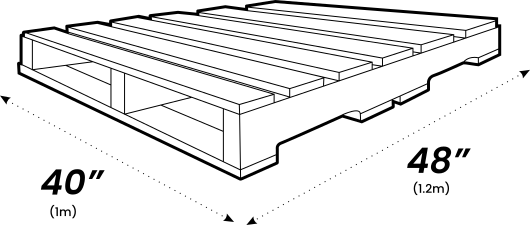
4-Way Pallet
The 4-way pallets allow entry from both sides and both front and rear via notched stringers. This pallet is more versatile than 2-way pallets of the same configuration. Pallet jacks cannot normally access the side entry of these pallets.
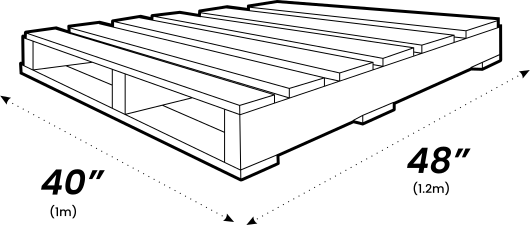
2-Way Pallet
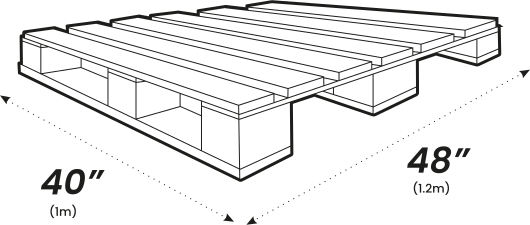
Block Pallet
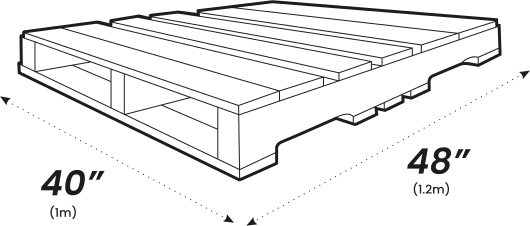
4-Way Oak Heavy Duty Pallet
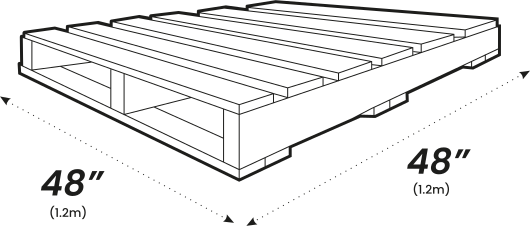
3-Stringers Pallet
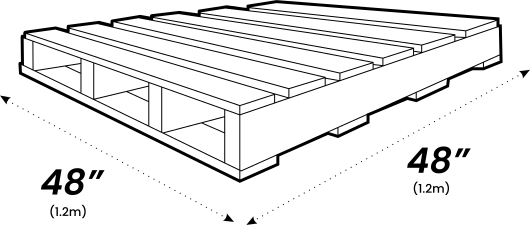
3-Stringers Pallet
Pallet details & images graciously provided by Advance Lumber & Pallet Ltd
Custom Pallets for Your Specific Needs
Every project is unique, and some industries require pallets with precise specifications: exact dimensions, treatments to resist moisture or insects, or finishes suitable for transporting sensitive products.
Do not hesitate to contact one of our members: they can design custom pallets perfectly suited to your requirements and guide you at every step to ensure the quality and durability of your storage or transport solutions.